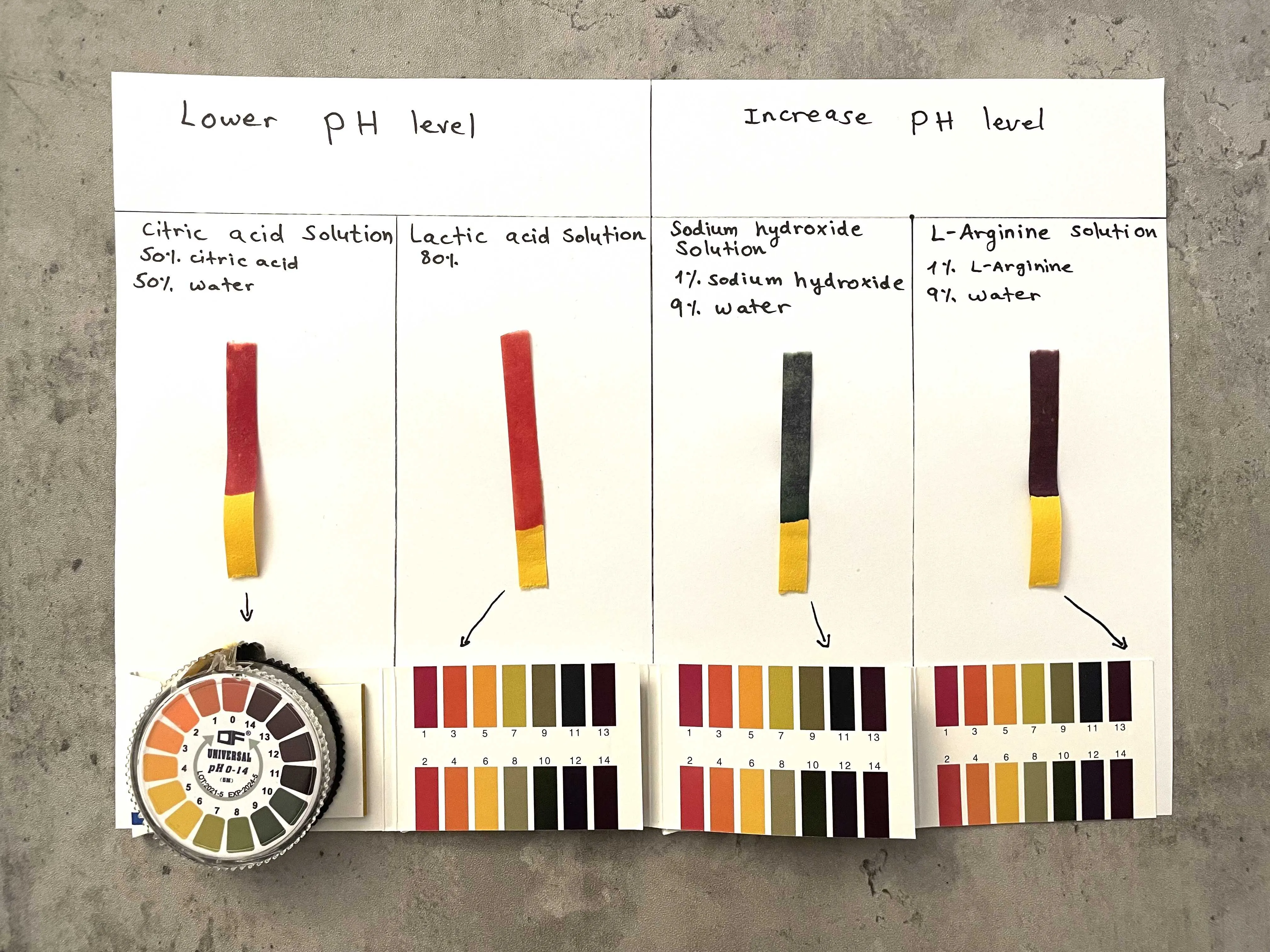
PH level is important when you’re making skin care products, not all products have the same PH level. Most skin care products will have a PH level between 4.5 and 7. Cold processed soaps will have 9 PH level. More than 9 PH levels will be too drying and stripping for our skin.
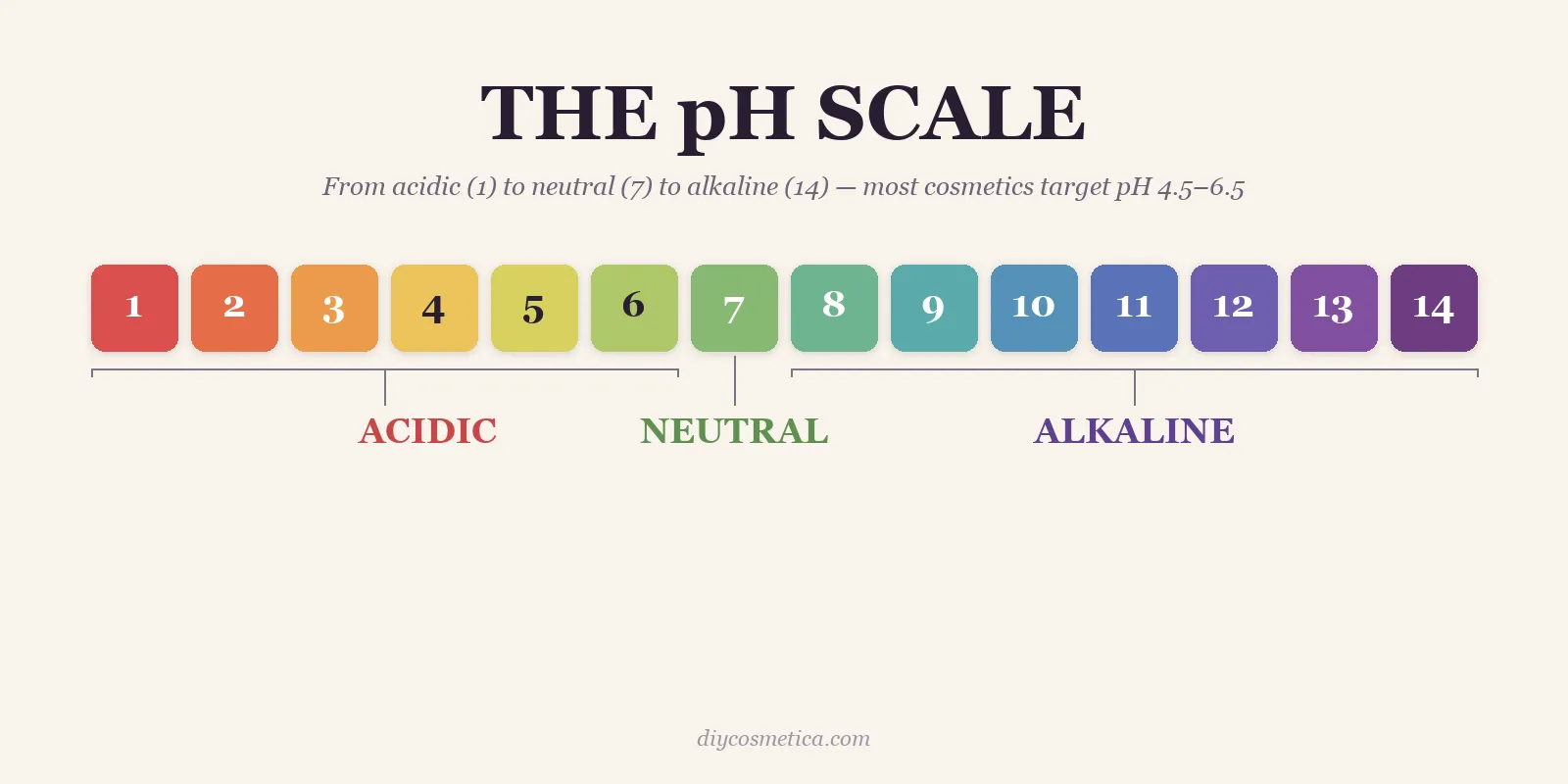
What pH actually is (in plain English)
pH is a number between 0 and 14 that tells you how acidic or alkaline a watery mix is. Zero is the most acidic, 14 is the most alkaline, and 7 sits right in the middle — that’s where pure water lives.
Behind the scenes, pH is counting hydrogen ions (tiny charged particles) floating around in water. The more hydrogen ions, the more acidic. The fewer, the more alkaline. That’s why pH only exists where water exists — without water, there’s nothing for the ions to float in, and the number simply doesn’t apply.
One thing worth knowing: the pH scale is logarithmic. That means pH 4 isn’t a little more acidic than pH 5 — it’s ten times more acidic. Jump two numbers and you’re a hundred times stronger. This is why small drops of a pH adjuster can swing your reading a lot, and why you always go slow.
Why anhydrous products don’t have a pH
If a product is all oils, butters, and waxes — like a lip balm, a body butter, a cleansing oil, or a solid perfume — it doesn’t have a measurable pH. Not “around 7,” not “neutral.” It just doesn’t have one. Oil isn’t water, so there are no hydrogen ions to count.
Don’t waste strips on these. If anyone tries to sell you a “pH-balanced” balm with no water in it, you can quietly roll your eyes.
The moment you add even a small water phase (a hydrosol, aloe juice, an extract, a humectant solution), pH is back on the table and you need to test.
All products that contain water (many surfactants are water base ingredients) need to be checked for their PH level. There is no need for a PH test for products that contain only oils and butters.
Many times, our final result will have a different PH level than recommended to the specific product.
Once you make a product you can check the PH with PH stripes or a PH indicator. I often use both to make sure my stripes are giving me the correct result.
Once you’ve checked the PH level you need to decide if you want to adjust it.
If the PH is lower than what is recommended, you’ll need to increase the PH level. If the PH level is higher, you’ll need to lower it.
You can support this website through the Buy Me a Coffee platform. Your donation helps me continue creating free formulas, detailed written posts, tutorials, and educational content for anyone who wants to learn how to make their own cosmetic products.
Running the website takes time and effort, from researching ingredients and testing formulas to writing posts, filming videos, editing content, and maintaining the site. Even a small donation helps support this work and allows me to keep sharing useful content for free.
If you find the website helpful and want to support future formulas and tutorials, you can donate through Buy Me a Coffee. Your support is truly appreciated.
Come join the forum, ask questions, learn from others, and share your own knowledge with the community.
Target pH by product type
Before you start adjusting, you need to know what you’re aiming for. Here are the working ranges for the most common DIY product types.
| Product | Target pH | Why this range | What happens outside it |
|---|---|---|---|
| Face cleanser | 4.5–6 | Close to the skin’s acid mantle; cleans without stripping. | Too high: tight, dry, irritated feel. Too low: stinging on sensitive skin. |
| Toner | 4–5.5 | Re-balances skin after cleansing, supports actives that follow. | Too high: blunts AHA/BHA layers underneath. Too low: stings, can over-exfoliate. |
| Serum (water-based) | 4.5–6 | Lets most actives (niacinamide, peptides) sit happily on the skin. | Off-target: actives lose potency, preservatives can fail. |
| Vitamin C serum (L-ascorbic) | 3–3.5 | The only window L-ascorbic acid is actually active in. | Above 3.5: oxidises fast, turns brown, stops working. |
| AHA / BHA exfoliant | 3–4 | The pH window where the acid is in its “free” form and can exfoliate. | Above 4: the acid is bound up and just sits there doing nothing. |
| Day cream / face moisturiser | 4.5–6 | Matches skin, keeps emulsion + preservative stable. | Too high: barrier feels disrupted; preservative weakens. |
| Body lotion | 5–6 | Body skin tolerates a bit higher; comfortable, stable emulsion. | Above 7: can feel sticky/soapy and may destabilise the cream. |
| Sunscreen (mineral, zinc oxide) | 6–7.5 | Zinc oxide is stable here and doesn’t dissolve into the water phase. | Below 6: zinc starts reacting, sunscreen turns gritty. |
| Shampoo | 5–6.5 | Close enough to scalp pH; mild surfactants stay functional. | Too high: scalp irritation, dull rough hair. |
| Hair conditioner | 3.5–4.5 | Lower pH closes the hair cuticle and adds shine. | Above 5: hair feels rougher, less shiny. |
| Deodorant (water-based) | 4–5 | Discourages odour-causing bacteria; comfortable on thin underarm skin. | Above 6: less effective on odour, can irritate freshly shaved skin. |
| Cold-process soap | 9–10 | Soap is, by chemistry, alkaline — you can’t make “pH 5 soap” without changing the system to a syndet. | Above 10: drying, harsh; below 8 usually means unsaponified lye or a measurement error. |
| Anhydrous balm / oil serum | n/a | No water, no pH. | Don’t test, don’t worry. |
So how do we increase the PH level?
To increase the PH there are 2 common methods:
1. Using a sodium hydroxide solution
Sodium hydroxide also known as NaOH, lye or caustic soda, It is very caustic and aggressive to the skin. You must wear protective gloves and eye protection while working with sodium hydroxide, this ingredient can cause burns so make sure you are protected before starting the solution. Since you are going to use a very small amount of this ingredient to adjust the pH, there would be no residues of it in your finished product and the final product will be safe to use. You’ll need pharmaceutical or cosmetic sodium hydroxide, the one that is used for soaping.
Add 1% Sodium hydroxide to 9% distilled water and mix until the sodium hydroxide fully dissolves in the water.
- Always protect your hands and eyes while working with sodium hydroxide.
- Measure 9g of water in a heat resistant beaker (first we add the water)
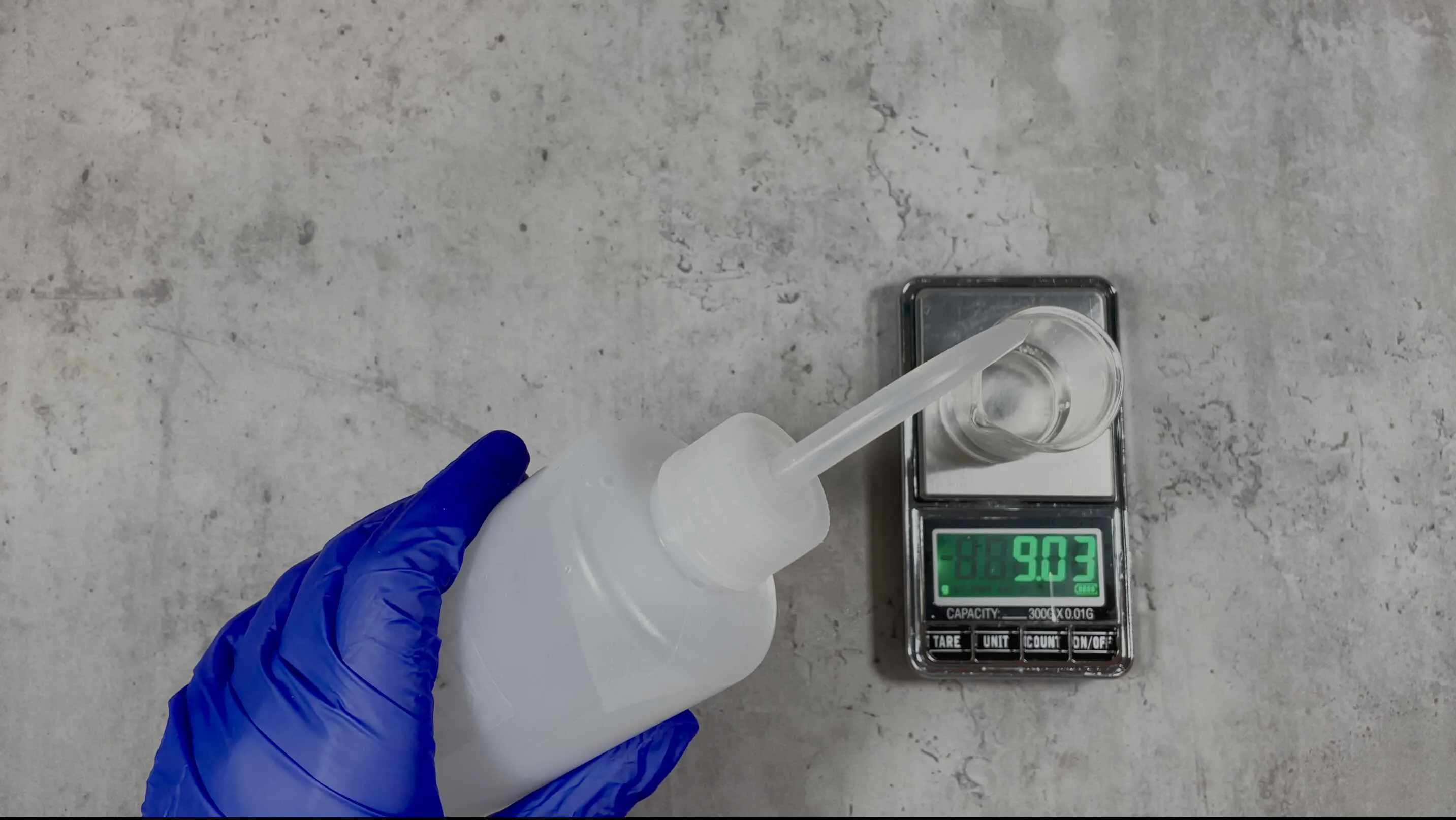
- Add 1g of sodium hydroxide to the water
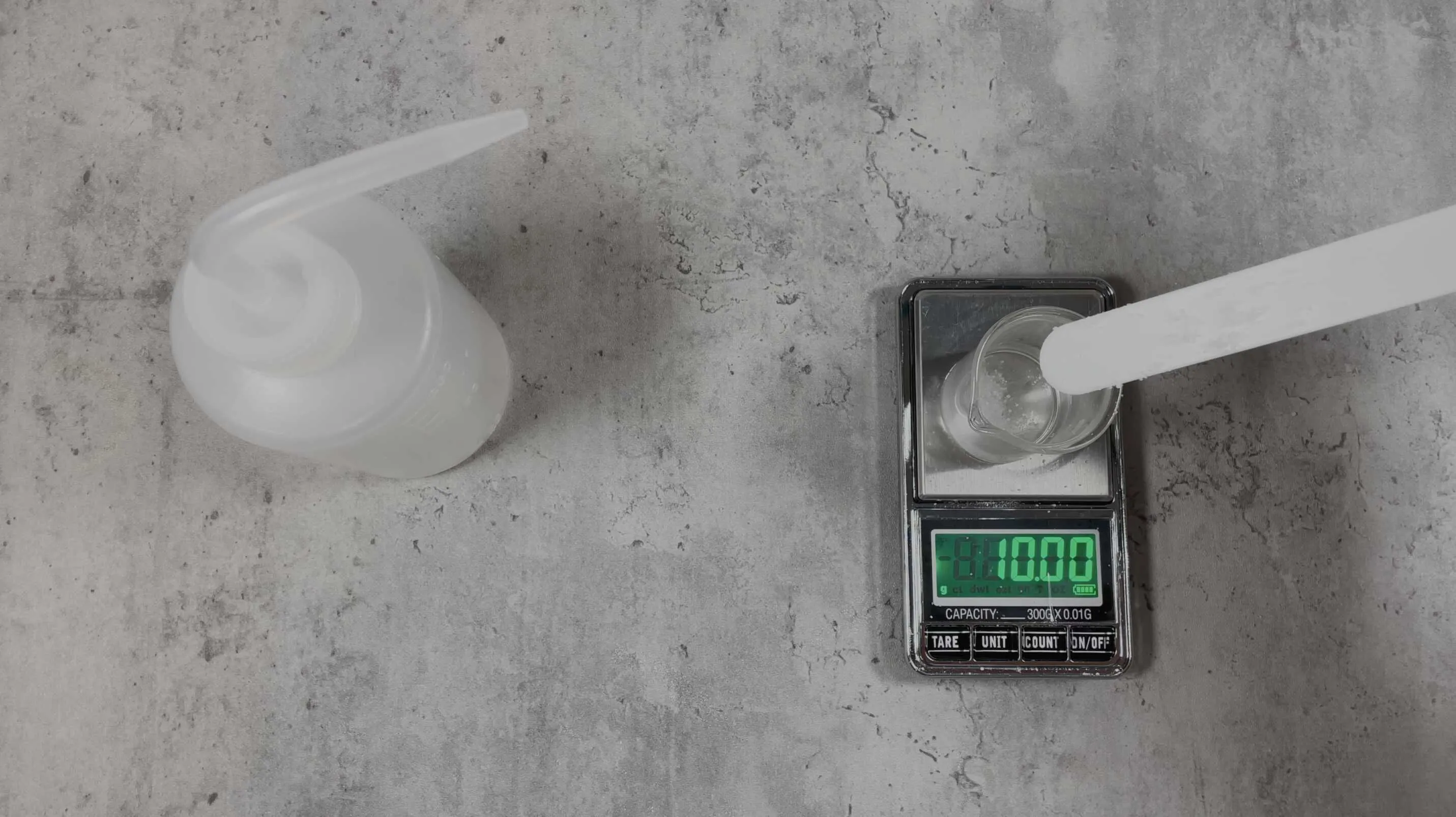
- Mix until the sodium hydroxide fully dissolved
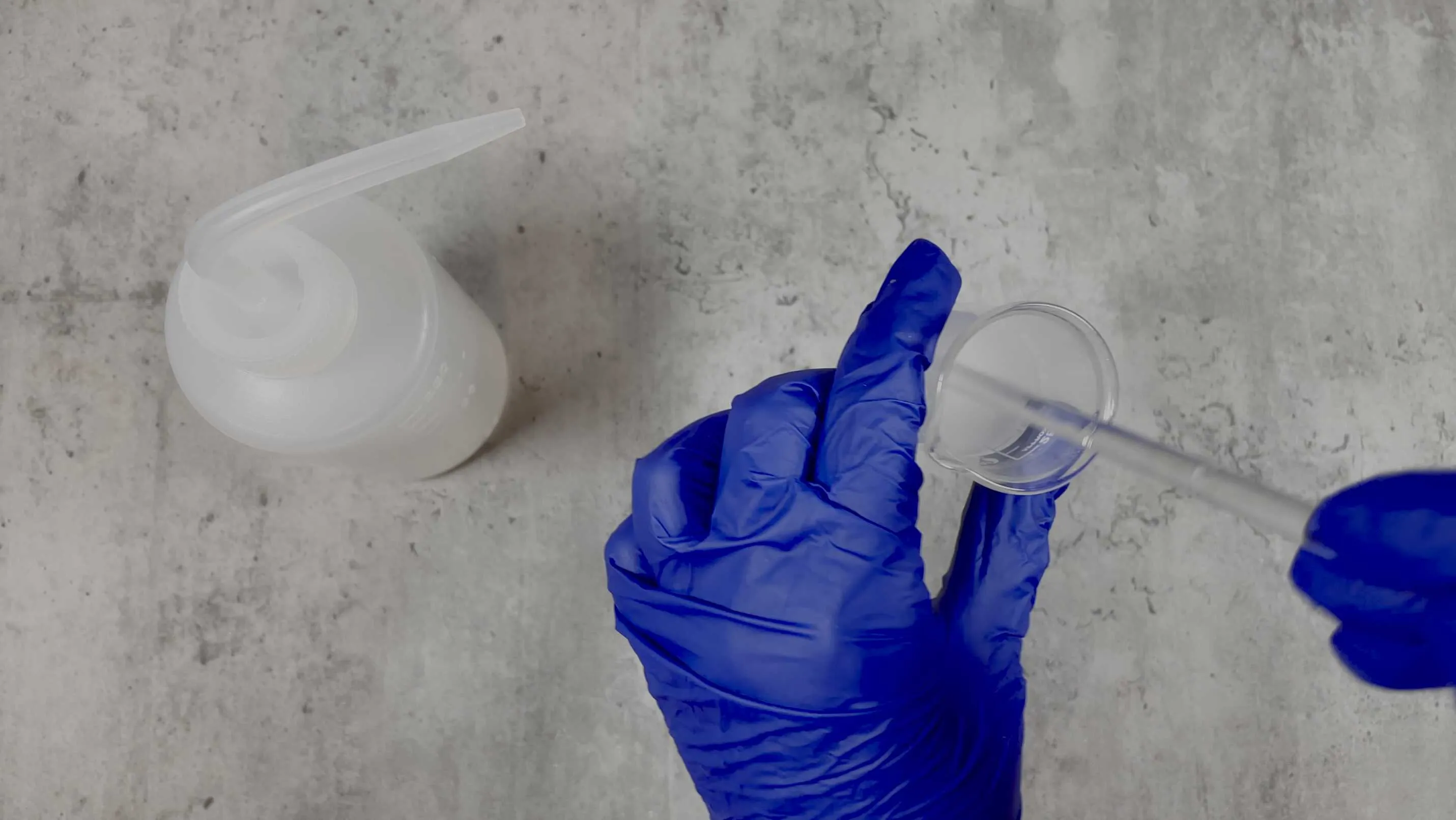
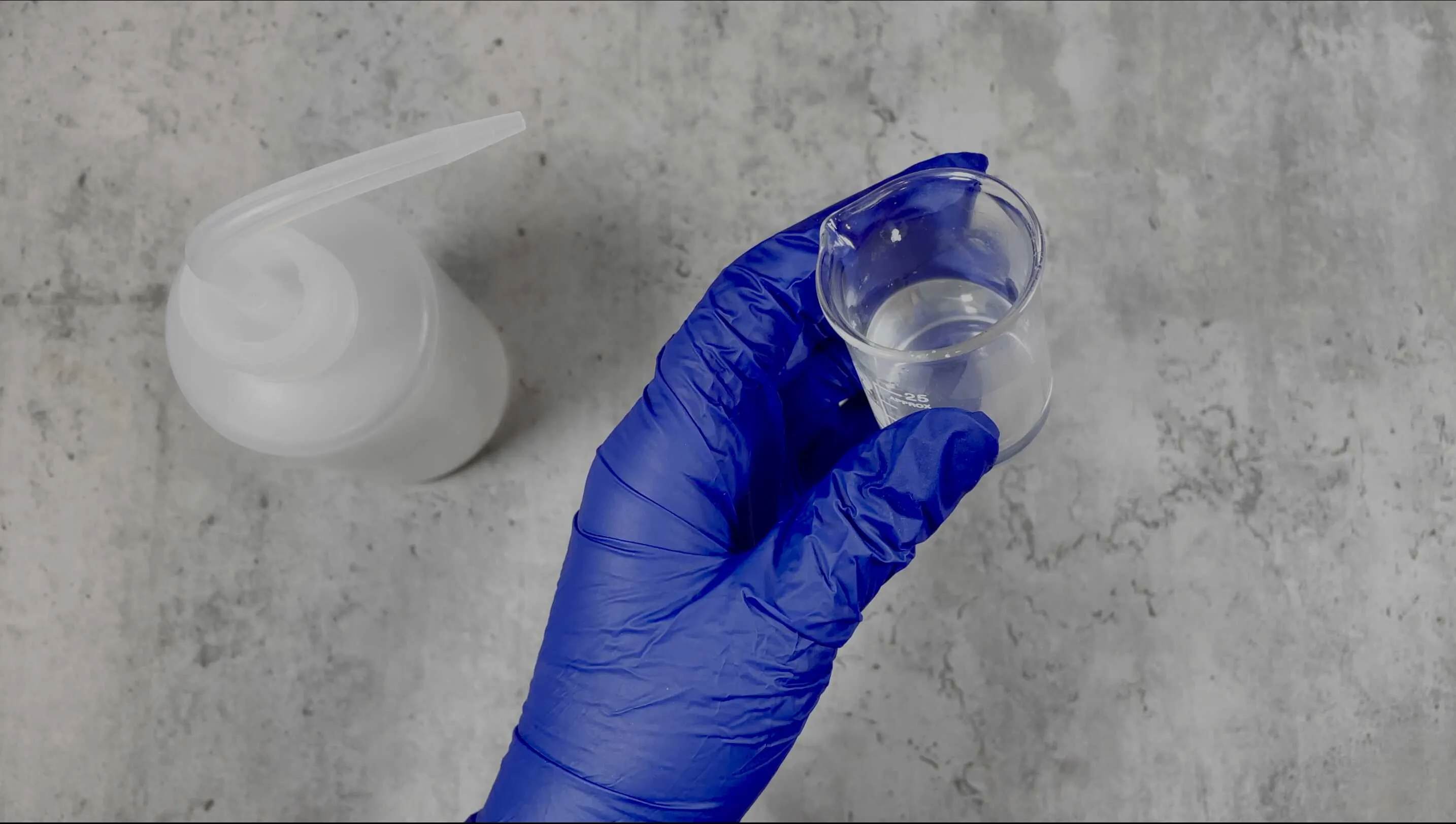
- The PH level is high on the scale, use a pipet in order to add some drops to your product when you want to raise the PH.
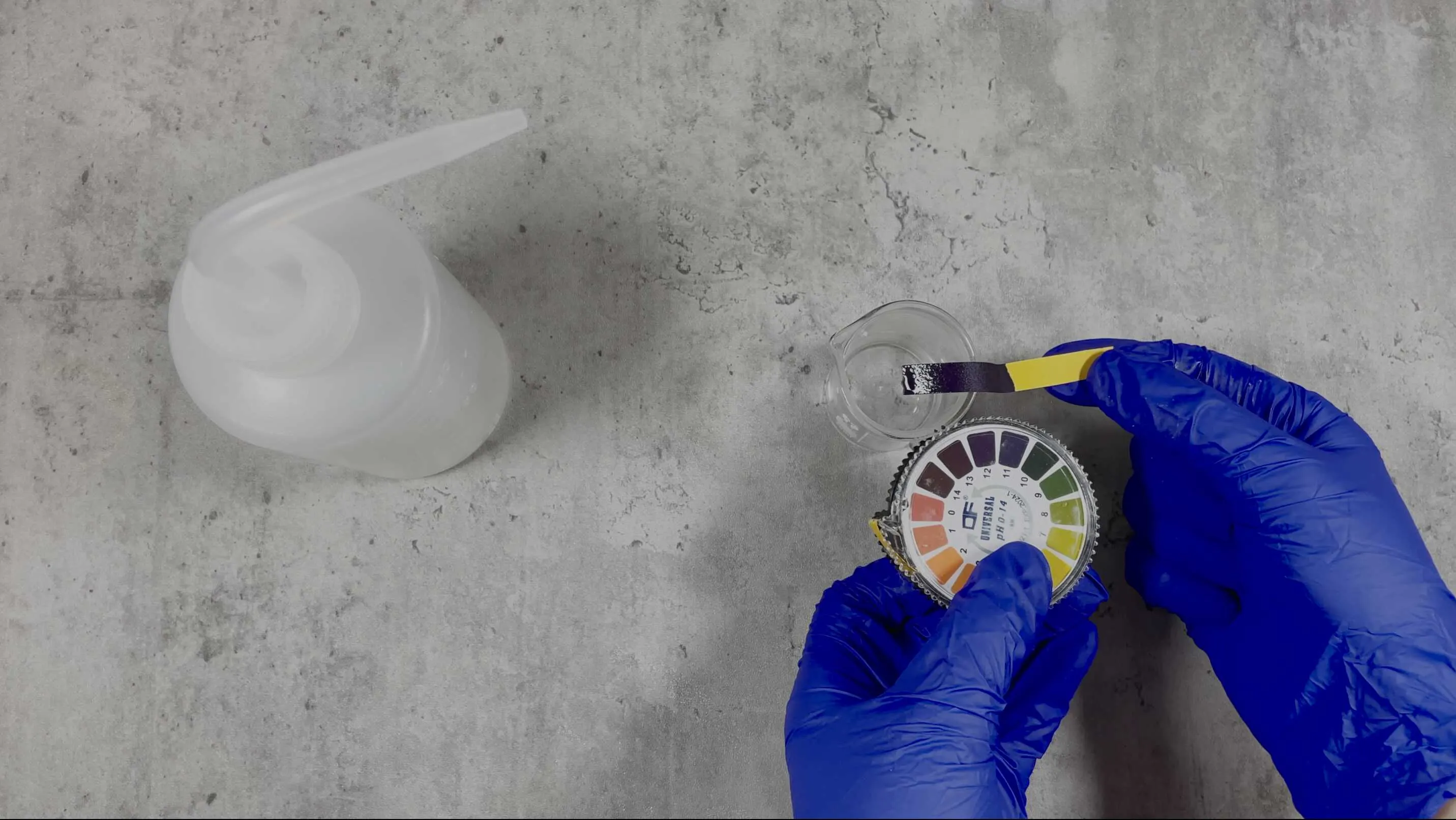
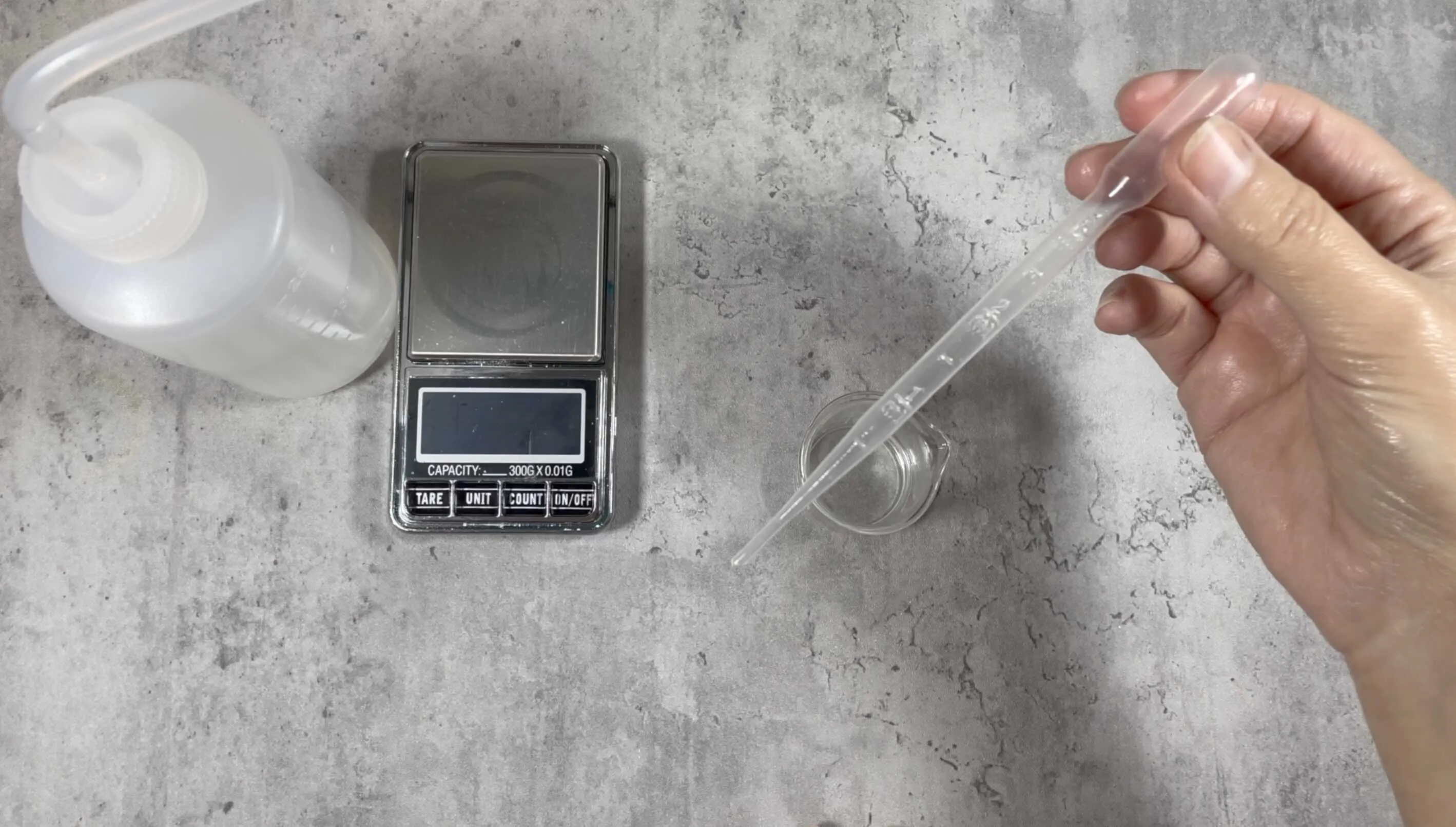
2. Using L-Arginine solution
L-Arginine is an a-amino acid that is used in the biosynthesis of proteins.L-Arginine is naturally present in the body. L-Arginine is easily soluble in water. It is milder and easier to work than working with NaOH (sodium hydroxide). Add 1% L-Arginine to 9% distilled water and mix until the L-Arginine fully dissolves in the water.
- Add 1g of L-Arginine powder to a beaker
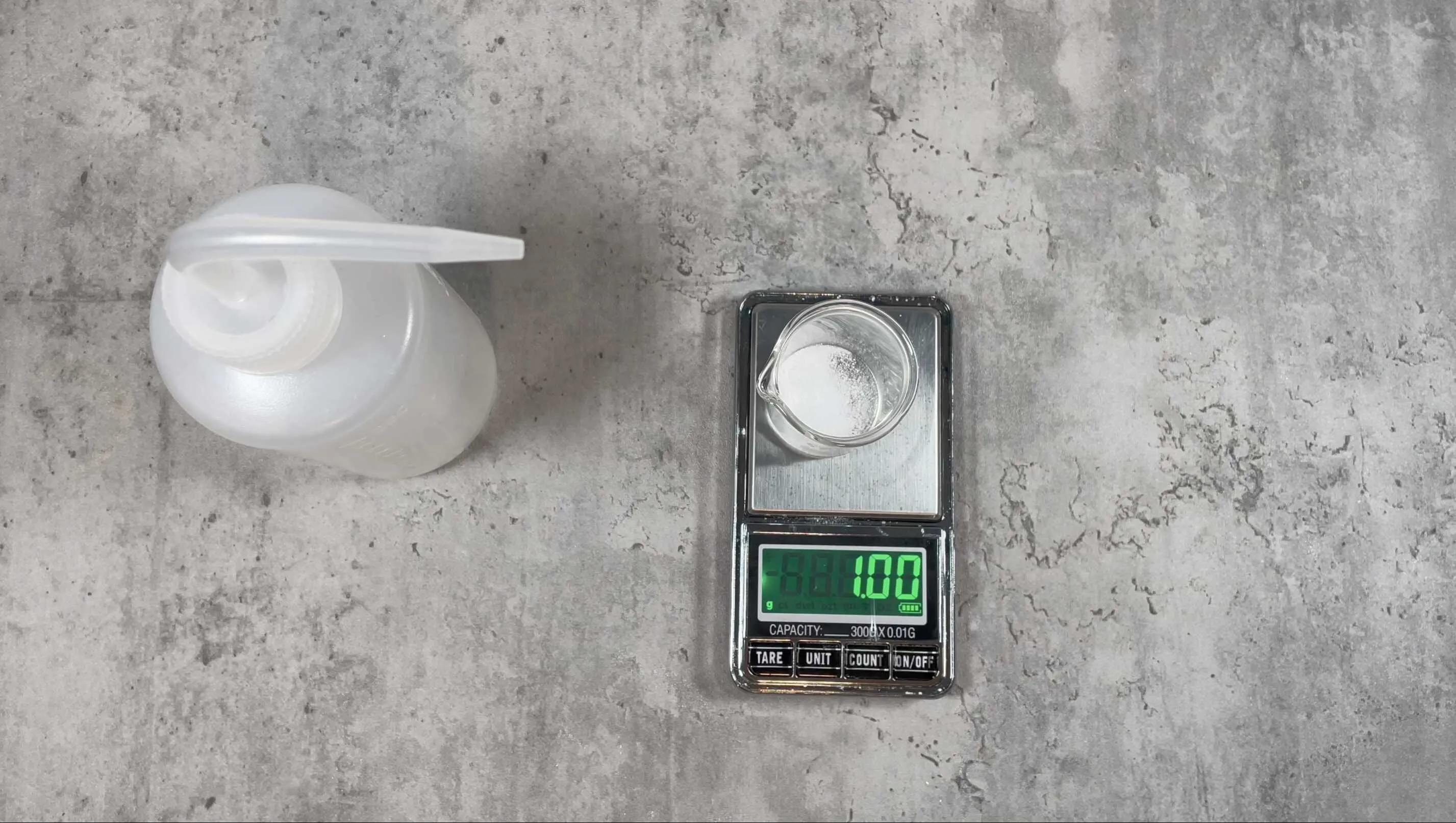
- Add 9g of water to the same beaker
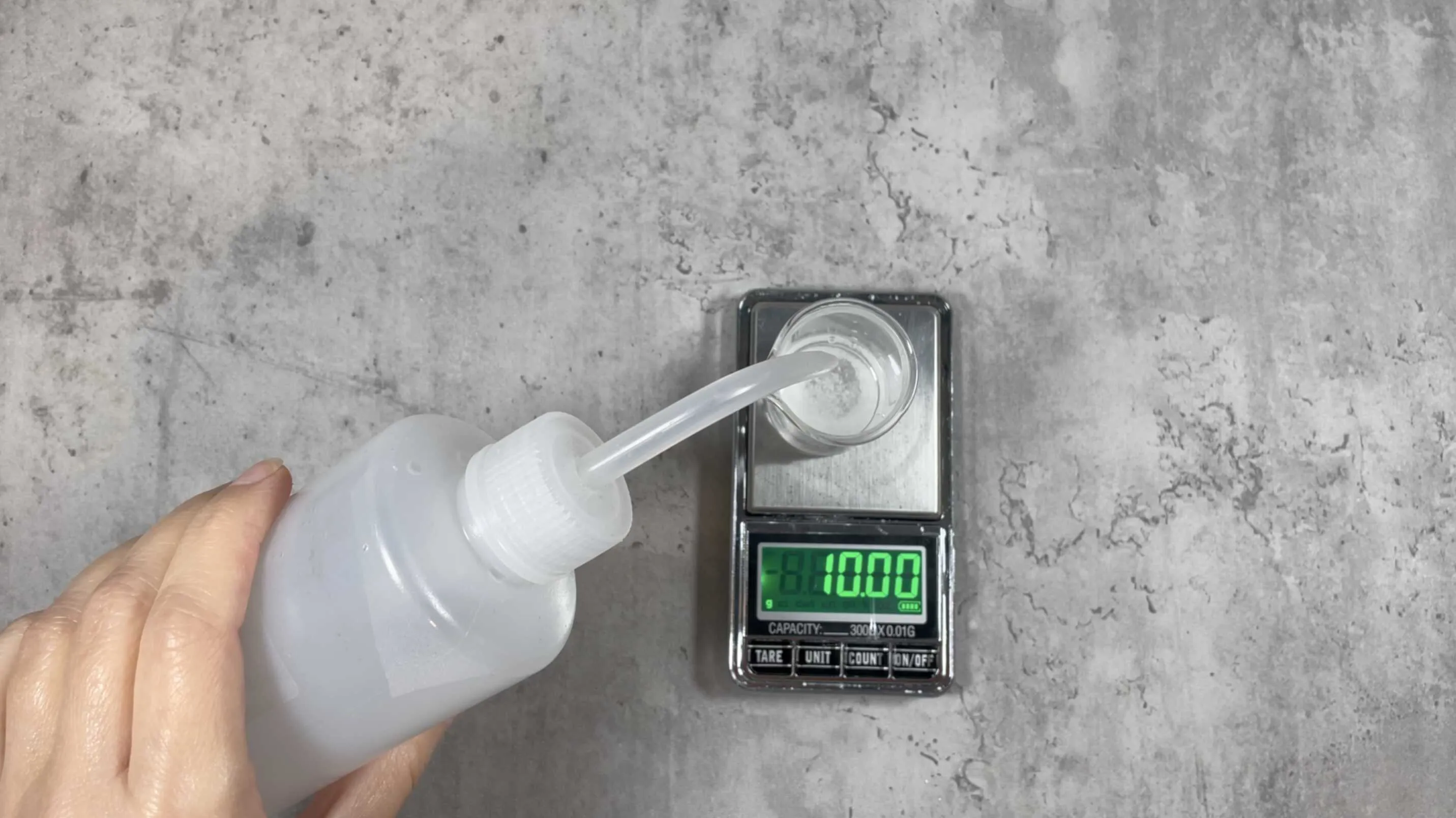
- Mix until all the L-Arginine dissolved
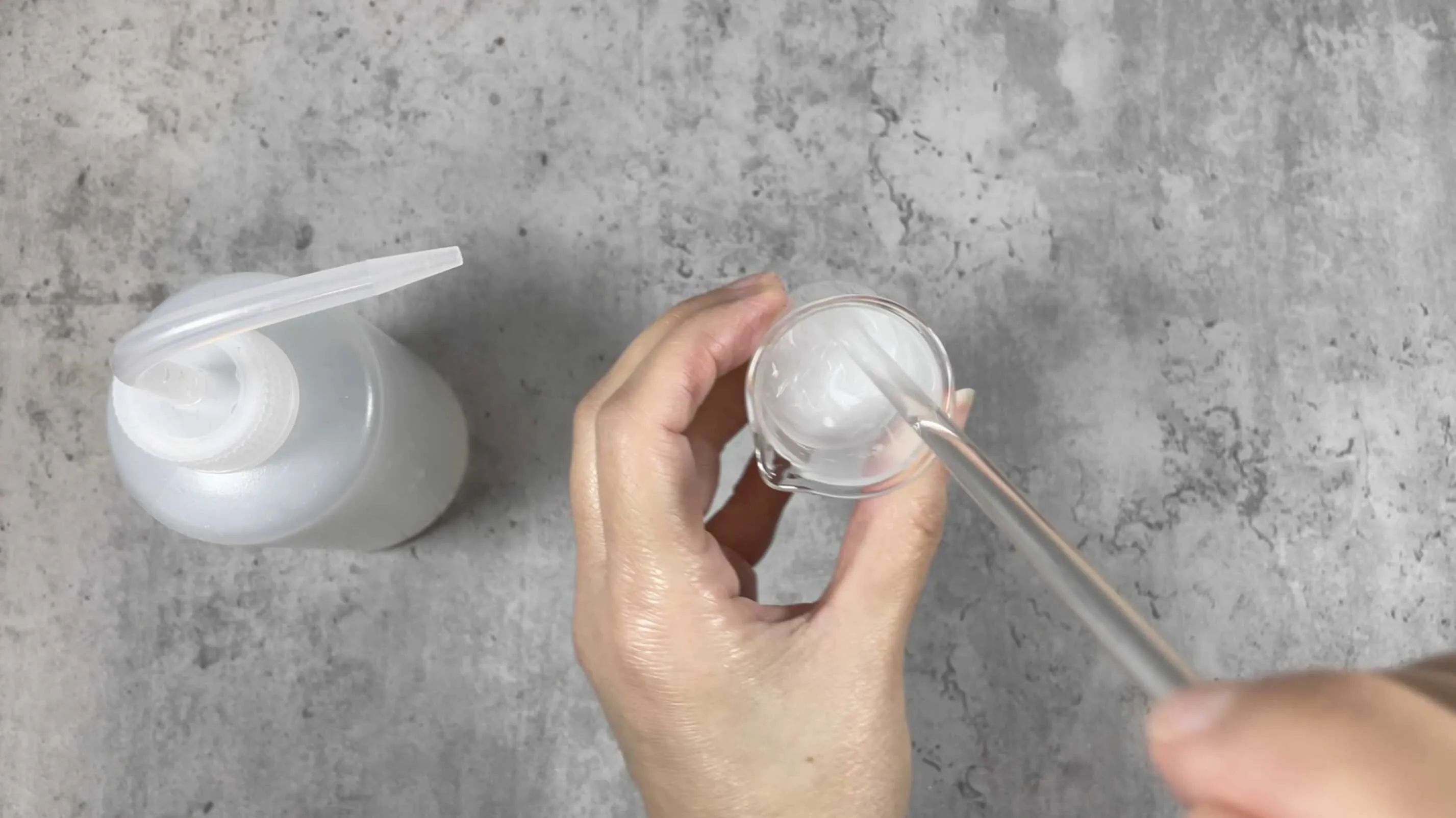
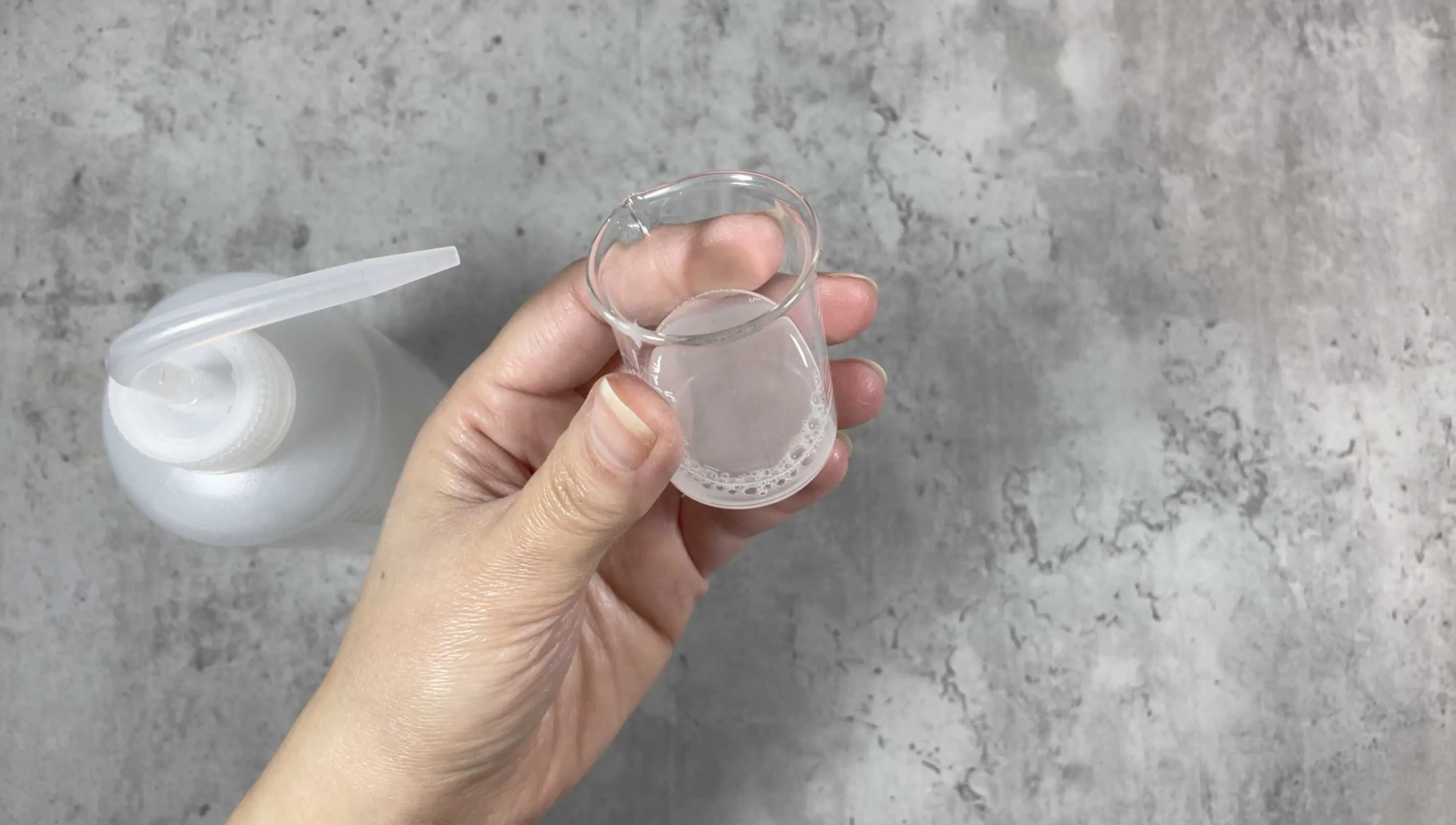
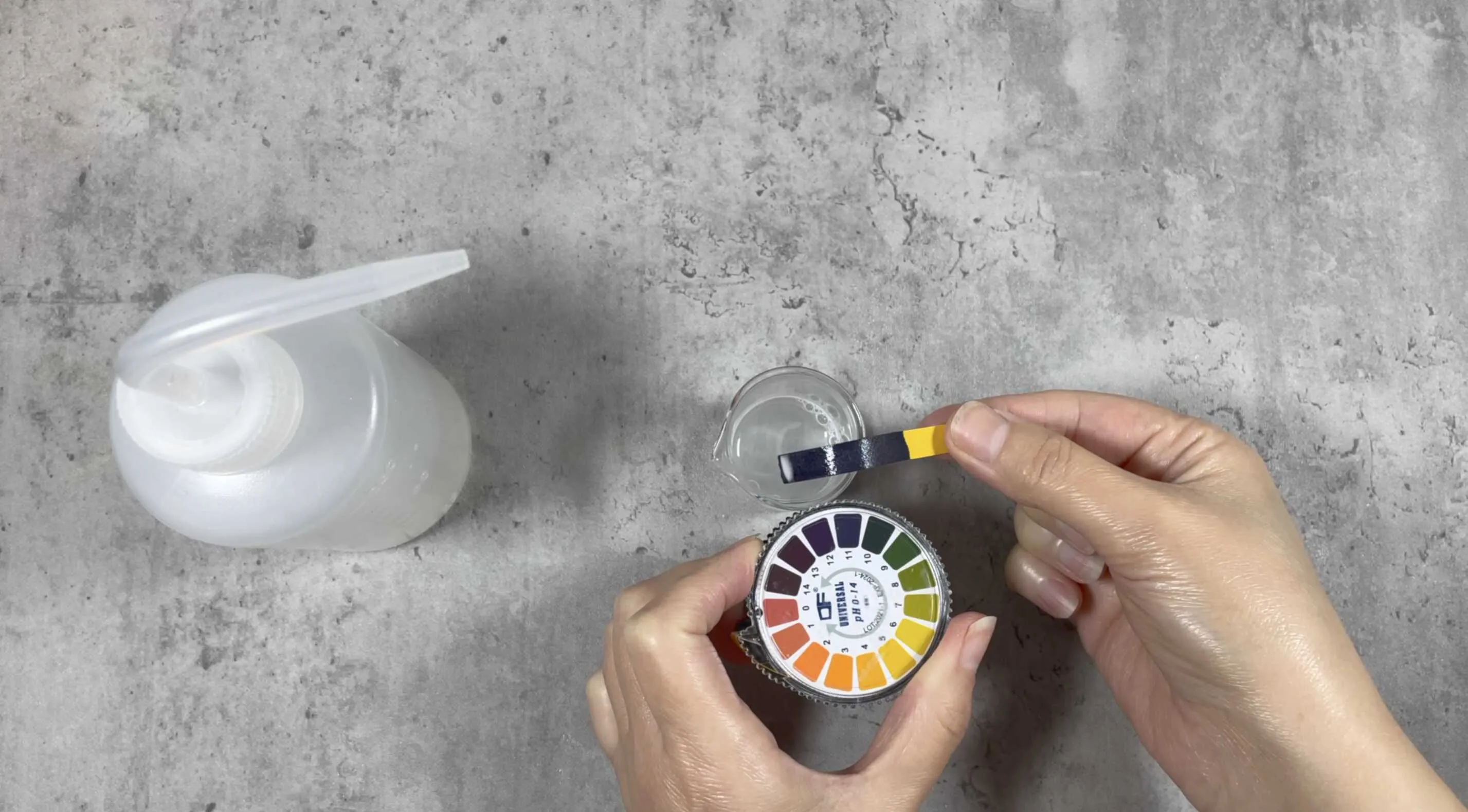
Once you have your solution, add only a few drops with a pipet to the product, mix well and check the PH again, if needed add some more drops of the solution and check again.
And how do we lower the PH level?
To lower the PH citric acid and lactic acid are the most suitable acids in skin care products.
1. Using Citric Acid Solution
Citric acid is usually sold as a powder. It is cheaper than lactic acid. In addition to lowering the pH, citric acid is a chelator (binding metal ions) and can enhance the performance of the preservative. Add 5% of citric acid to 5% of distilled water and mix well to dissolve the citric acid completely. Once your citric acid solution is ready add a few drops to your product and check the PH level. If you need to lower the PH a bit more, add a few more drops and check again.
- Add 5g of citric acid to a beaker
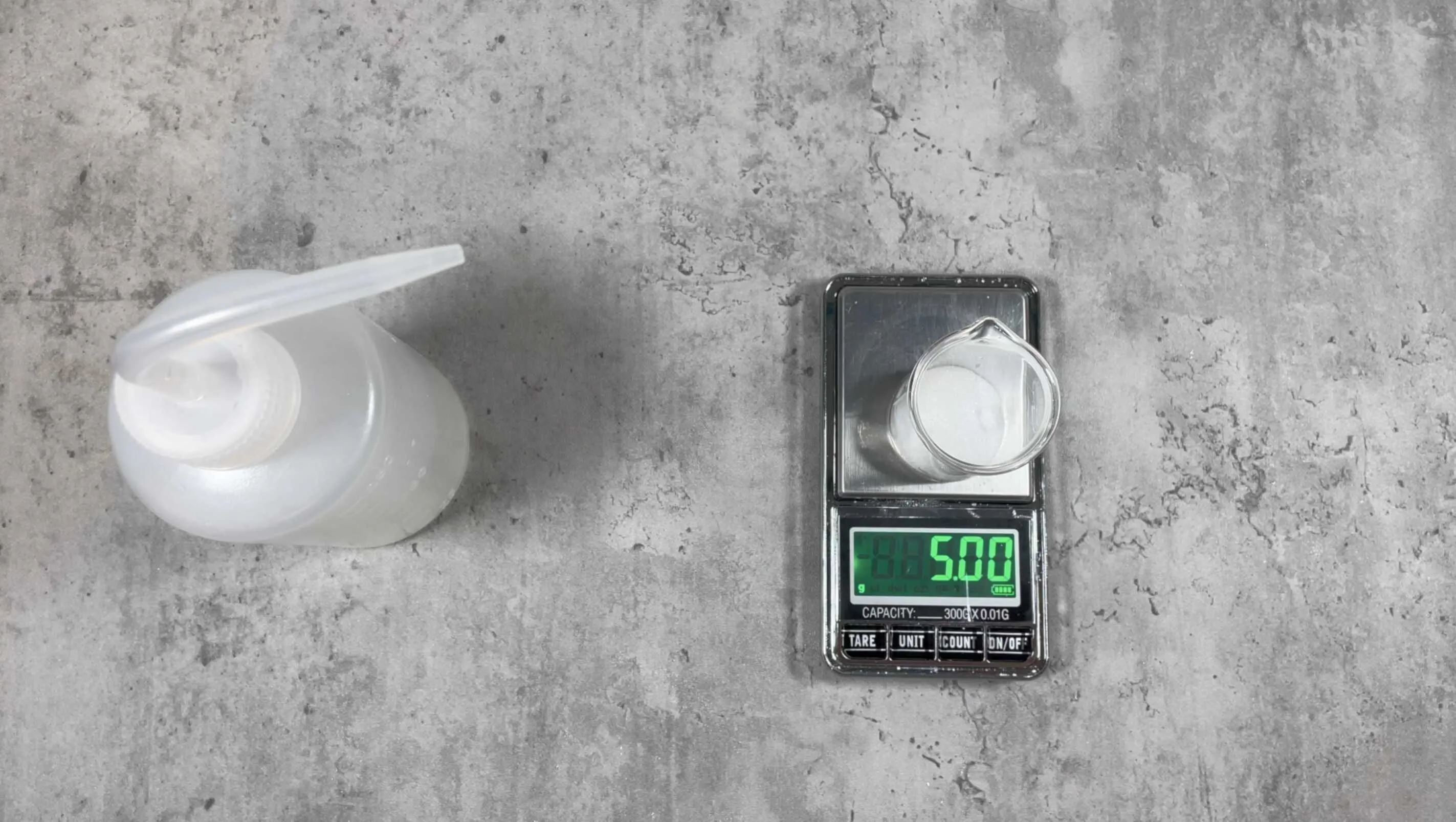
- Add 5g of water
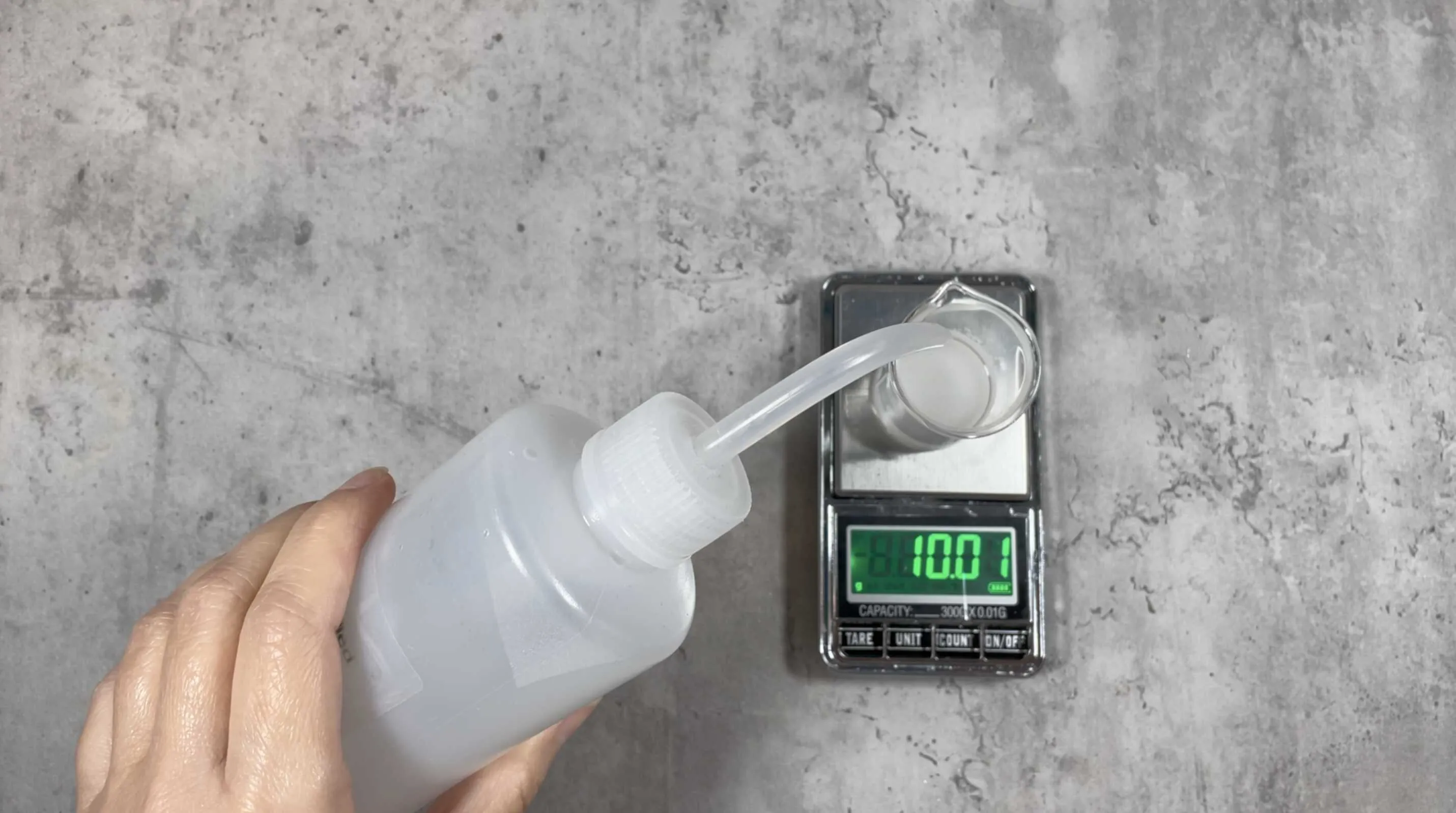
- Mix until the citric acid is fully dissolved
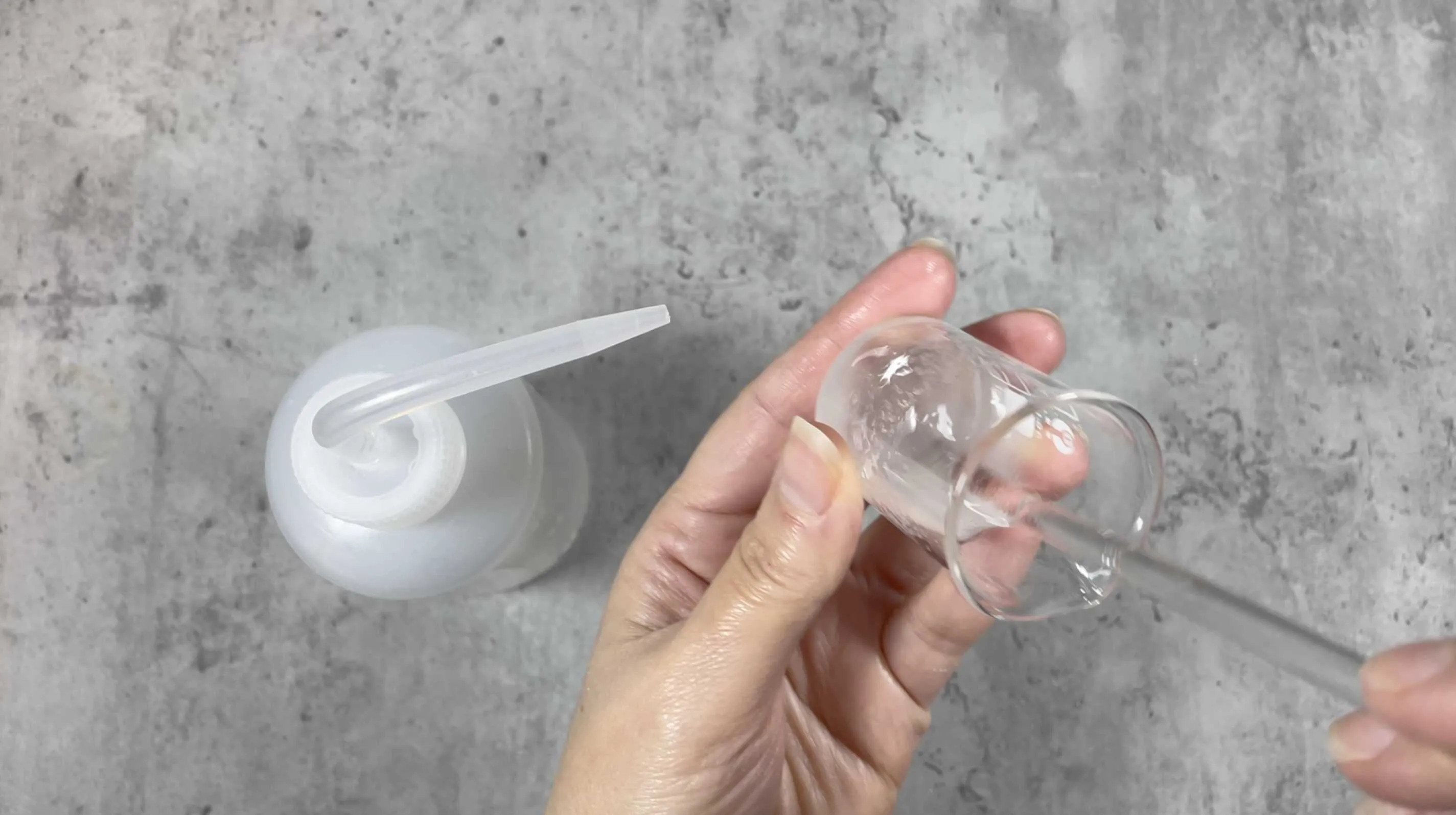
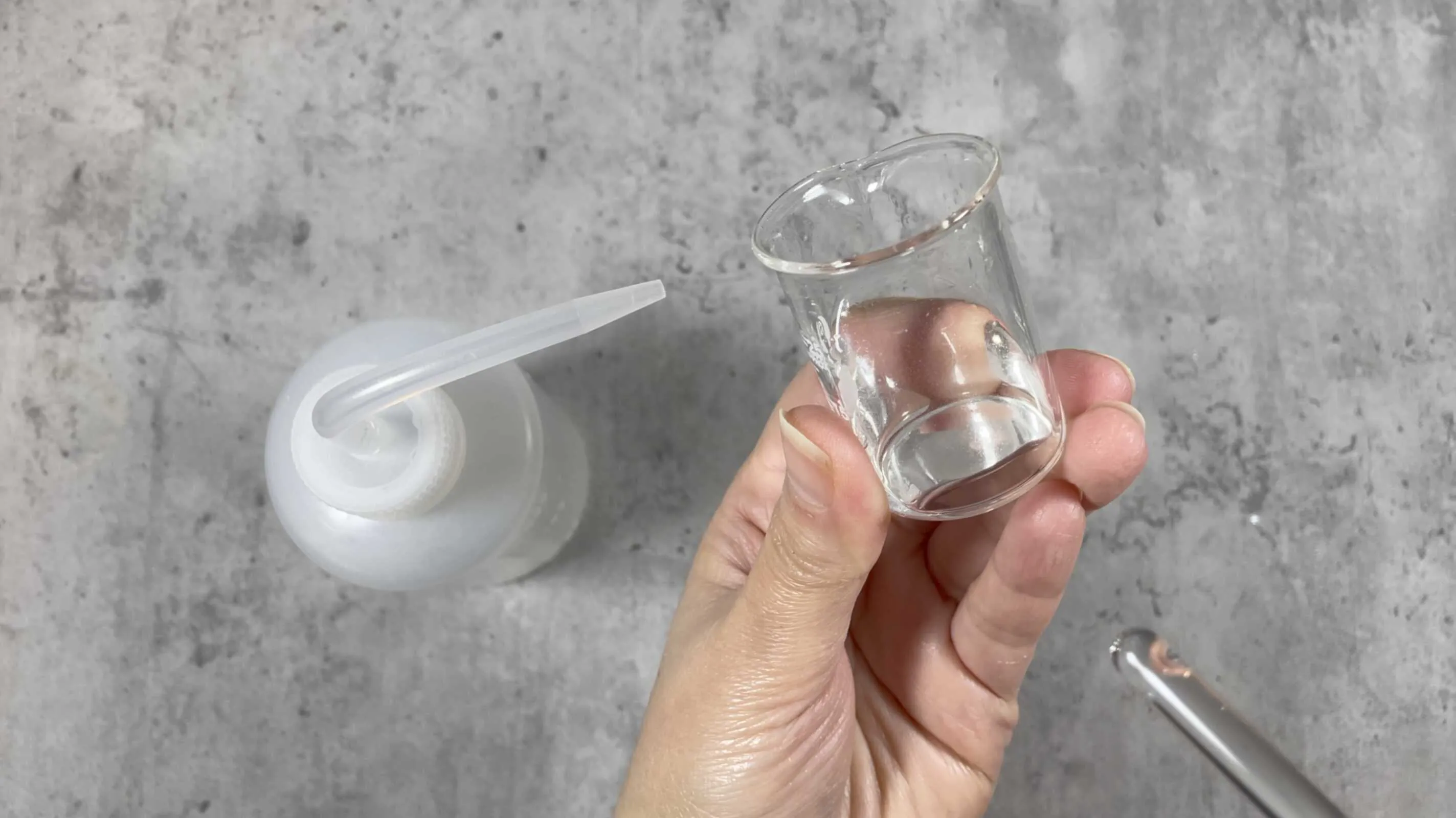
- The PH level is very low, when you wish to use this solution to lower the PH of your product, use a few drops of the solution in your product. Use a pipet and start with only 3-4 drops before checking the PH again.
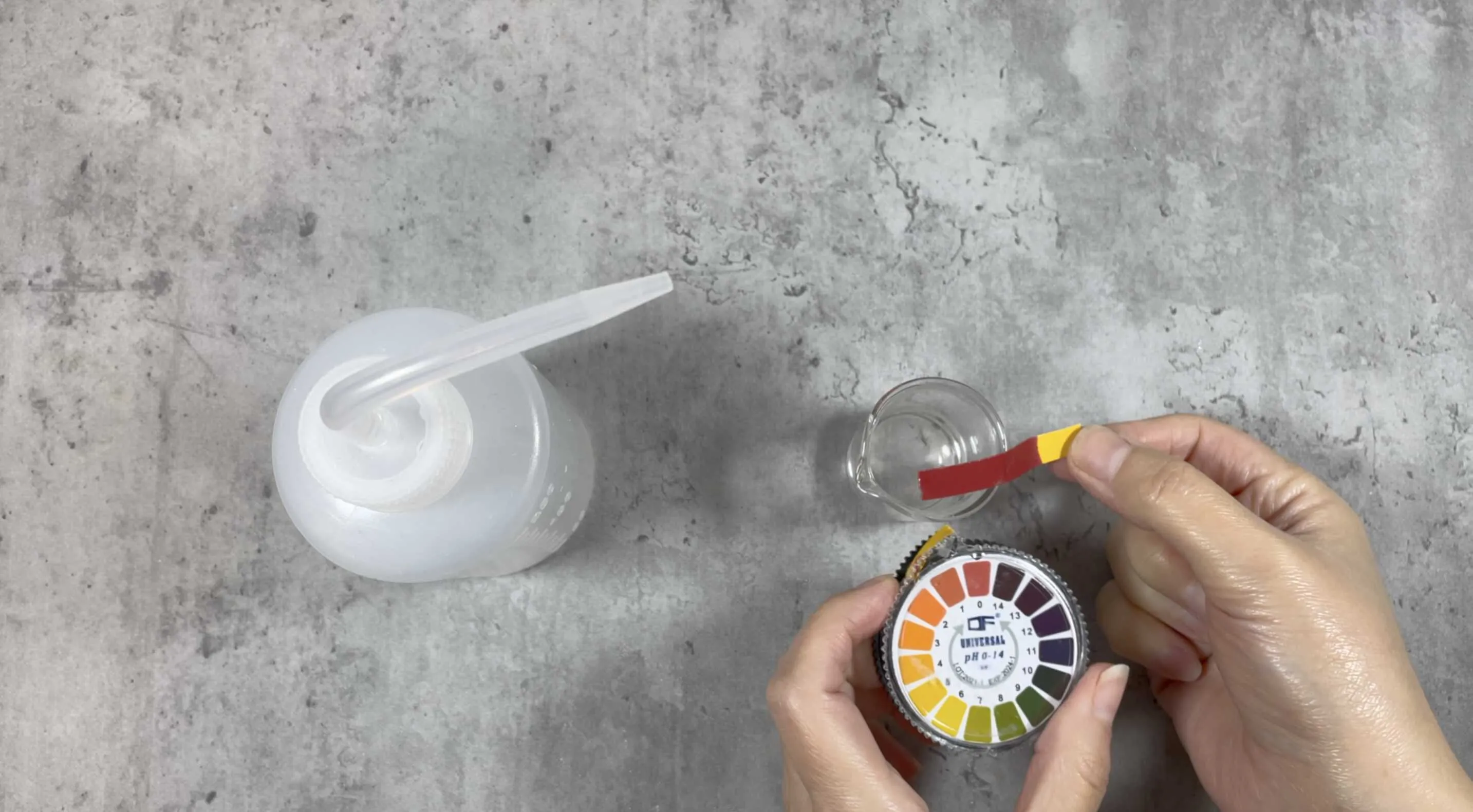
2. Using Lactic Acid Solution
Lactic acid is usually available as an 80% solution or a 60% solution. It is more expensive than citric acid and in 80% concentration it could be quite corrosive (handle with care, avoid contact with skin). Lactic acid, in addition to lowering the pH, has moisturizing properties. It is an AHA (alpha-hydroxy acid), the same acid used in chemical peelings. Since it is sold as a solution (although originally it’s a powder) you can add a few drops of the lactic acid solution and check the PH level, if needed add a few more drops and check again.
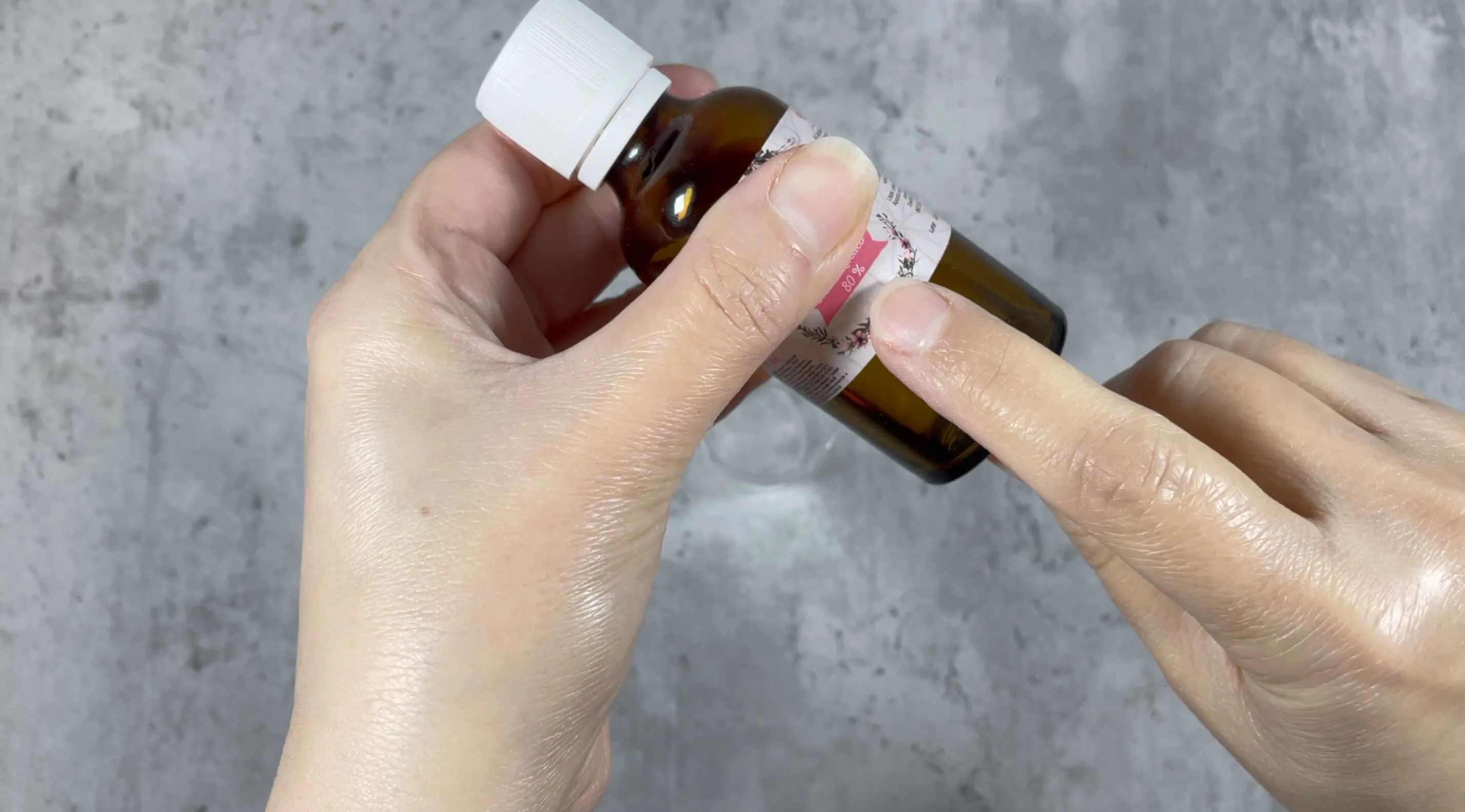
- Lactic acid 80% or 60% is already a prepreded solution, so when you want to use it just use a few drops of the lactic acid solution to your finished product.
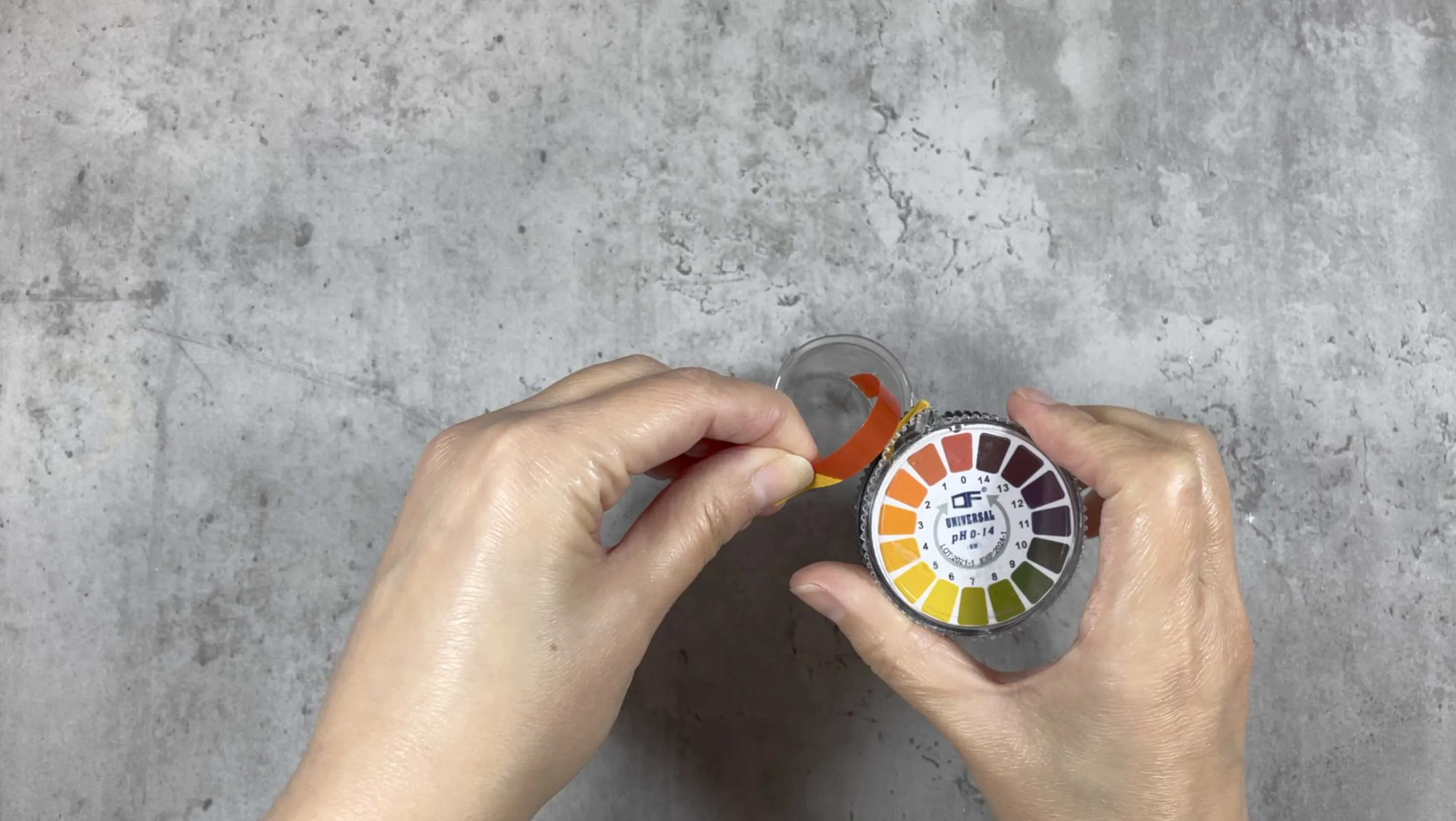
The math behind your working solutions
You don’t need to memorise chemistry, but knowing how the solutions are built makes it easier to mix new ones from scratch.
- 10% citric acid solution — 1 g citric acid powder dissolved in 9 g distilled water. Stir until clear. Strong enough to drop pH meaningfully with just a few drops; mild enough to dose by pipette.
- 20% lactic acid solution — if your lactic acid arrives as the standard 80% or 90% supply, you can pre-dilute it to a more pipette-friendly 20% strength: 2 g of 80% lactic acid + 6 g distilled water. (Lactic acid is sold as a liquid, so your “powder” math doesn’t apply.)
- 1% NaOH solution — 1 g sodium hydroxide powder into 9 g distilled water. Always add the powder to the water, never the other way round, and wear gloves and goggles. The mix will heat up; let it cool before testing.
- Stronger versions exist (citric or NaOH at 20–50%), but at home, weaker is friendlier. Weaker solutions = more drops = more control. Strong solutions overshoot the target fast.
pH-adjustment ingredients — cheat sheet
| Ingredient | What it does | Typical use rate | Pros / cons |
|---|---|---|---|
| Citric acid powder | Lowers pH | Mix as a 10% solution (1 g in 9 g water); dose a few drops at a time | Pros: cheap, easy to find, also chelates metal ions (helps preservatives work harder). Cons: undiluted powder is too aggressive — always use as a solution. |
| Citric acid 10% solution | Lowers pH | Drops, into a finished water-phase product | Pros: predictable, gentle on the pipette. Cons: short shelf life — mix small batches. |
| Lactic acid 80% or 90% (supply form) | Lowers pH | Use neat by the drop, or pre-dilute to 20% | Pros: also moisturising (it’s an AHA); softer “feel” than citric. Cons: stronger forms are corrosive — gloves on; more expensive than citric. |
| Lactic acid 20% solution | Lowers pH | A few drops into a finished water-phase product | Pros: forgiving, easier to dose. Cons: extra step to mix. |
| Gluconolactone (GDL / PHA) | Lowers pH gently and slowly | 1–4% in formula | Pros: very mild AHA cousin; works well in sensitive-skin formulas; also acts as a humectant. Cons: slower acting, more expensive. |
| Sodium hydroxide (NaOH) 1% solution | Raises pH | Drops only | Pros: strong, predictable, the standard. Cons: caustic — gloves and goggles when mixing; not beginner-friendly. |
| Sodium hydroxide (cold-process soap) | Saponifies oils into soap | Calculated via a lye calculator (each oil has its own ratio); typically 5–8% superfat margin | Pros: this is what makes soap soap. Cons: not a “pH adjuster” — it’s a reactant; never substitute it for a finishing pH step. |
| Potassium hydroxide (KOH) | Raises pH; used for liquid soap | Calculated via a lye calculator | Pros: makes a softer, water-soluble soap. Cons: same handling rules as NaOH; not used for finished cream pH tweaks. |
| L-Arginine 1% solution | Raises pH | Drops | Pros: amino-acid based, much gentler than NaOH, beginner-friendly. Cons: weaker, so it can’t lift very acidic formulas all the way up. |
| Triethanolamine (TEA) | Raises pH, neutralises carbomer thickeners | 0.5–1% | Pros: classic carbomer pairing. Cons: increasingly restricted in some regions, can form nitrosamines with certain preservatives — many DIYers skip it. |
| Sodium bicarbonate (baking soda) | Raises pH | n/a — avoid in cosmetics | Pros: easy to find. Cons: pH around 8.3, gritty, can sit undissolved and irritate skin (especially in underarm deodorants — common cause of underarm rashes). Use NaOH solution or L-Arginine instead. |
| Distilled water | Doesn’t adjust pH, but you need it for every solution above | All dilutions | Pros: clean, predictable. Cons: never substitute tap water — minerals throw your readings off. |
More notes:
-
When your product is finished and has cooled down to room temperature take 1% of the product and add 9% of distilled water, mix them well and check the PH level. If the PH needs adjustment, use one of the solutions to raise or lower the PH accordingly.
-
Since PH is temperature dependent. It is important to wait for the product to cool to room temperature and add room temperature water to make the dilution.
-
Cold processed soaps usually reach their final PH after 24-48 hours, after this time the soap bar will have around 9 PH level. If you wish to check your soap bar PH level you can damp one side of the soap with a bit of water, then rub the PH strip on the damp part of the soap, this is just to make sure the soap is now safe to use.
-
If you can get L-Arginine I would recommend using it over sodium hydroxide in order to raise the PH level of your products.
-
Between citric acid and lactic acid, I think each can benefit differently in skin and hair products, so it depends on what you want to achieve in a specific product.
Why your test reading can lie to you
A few quirks worth knowing before you panic at a weird number:
- Dilution changes the answer. A finished cream tested neat reads differently from the same cream diluted in water. That’s why most formulators dilute the sample 1:9 (1 part product to 9 parts distilled water) before testing — it’s the most repeatable way to get a number you can act on. Always dilute the same way every time, so your readings stay comparable.
- Temperature matters. Hot product reads lower than the same product cold. Always cool to room temperature before testing — and use room-temperature water for your dilution, too.
- Fresh vs cured. A just-made product can read one number on day one and a slightly different number a week later, especially if you’ve used acids, enzymes, or active extracts that keep reacting. Test on day one, then again after 24 hours, then again after a week before you finalise your formula.
- Strips are rough. They get you in the neighbourhood (within roughly 0.5 of a unit on a good day). A calibrated pH meter gets you to within 0.1. If you’re formulating a vitamin C serum or an AHA exfoliant where every decimal counts, you want the meter.
What makes pH drift over time
A finished product’s pH isn’t always stable. The most common reasons it shifts on the shelf:
- Active acids keep working. AHAs and BHAs can continue to react with other ingredients, slowly nudging the pH.
- Air contact. When distilled water meets air, it picks up a tiny bit of carbon dioxide and turns very slightly acidic (carbonic acid). It’s small, but it’s real, especially in low-preservative formulas.
- Microbial growth. A poorly preserved product can drop in pH as microbes produce acids. If your cream’s pH suddenly drops a full unit, treat it as a contamination warning, not a measurement issue.
- Ingredient incompatibility. Some plant extracts, ferments, and natural colourants are themselves acidic or alkaline and shift the system slowly.
When pH matters most (and when it doesn’t)
It matters most for: leave-on products, cleansers that touch the eye area, anything with an active acid (vitamin C, AHA, BHA), anything using a pH-sensitive preservative (sorbates, benzoates, GLDA), and anything claiming to “respect the acid mantle.”
It matters least for: rinse-off products with very short contact time, anhydrous balms and oils, and bar soaps (which are alkaline by design — that’s how soap works).
Common mistakes to avoid
- Testing the product while it’s still warm.
- Adding pH adjusters drop by drop without stirring between drops.
- Using tap water for dilutions (tap water has its own pH and minerals — always distilled).
- Trusting one strip reading without re-testing 24 hours later.
- Calibrating a pH meter once and then forgetting about it for months.
- Trying to “balance” the pH of a pure oil product. It can’t be done.